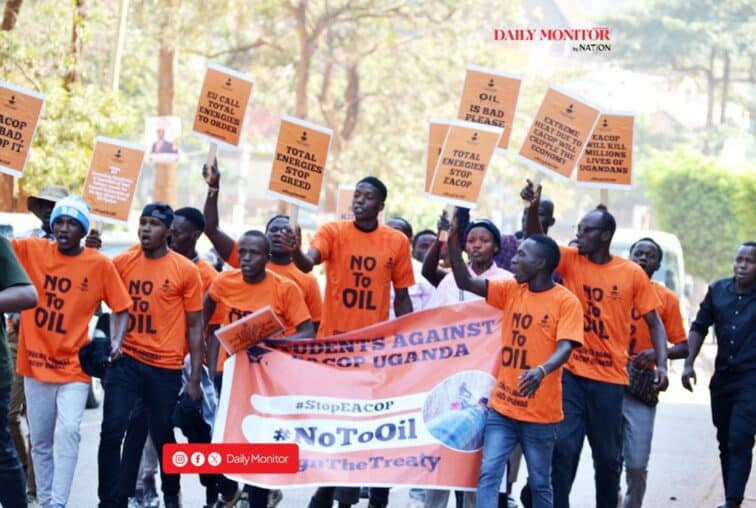
Photo Courtesy; Daily Monitor
By Mike Sebalu
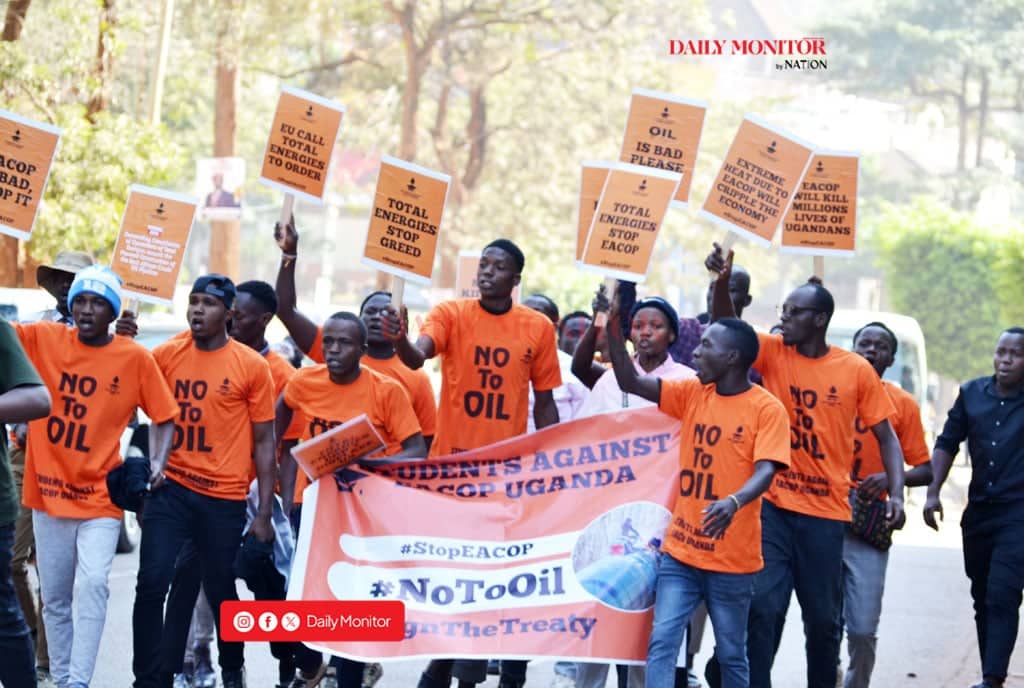
KAMPALA: A new report published by Africa Institute for Energy Governance (AFIEGO), a public policy research and advocacy Non-Governmental Organization has revealed that a sizeable percentage of communities whose land was compulsorily acquired for the East African Crude Oil Pipeline (EACOP) project in Uganda consider the Livelihood Restoration Programme (LRP) that is being implemented for the project as inadequate.
The program was started in 2022 and is being implemented by the EACOP Company through various sub-contractors.
Its inadequacy has put the restoration of the 3,648 households with over 24,744 individuals that were displaced for the project in Uganda at risk of not being restored to their pre-displacement socio-economic positions.
The research also showed that nearly 40% of EACOP project-affected persons (PAPs) have a negative attitude to the project.
Those affected assert that the pipeline is located too near their homes and therefore presents safety challenges to them.
The people also observed that the pipeline could affect their agricultural livelihoods through negatively affecting soil biodiversity, soil fertility and micro weather conditions.
Ms. Diana Nabiruma, the Communications Officer at AFIEGO spoke to KFM about the research findings.
“The EACOP project developers wanted to prevent the social economic impacts by implementing the livelihood restoration programme unfortunately, an assessment by AFIEGO shows there are major gaps in the implementation of the programme, and as a result, more efforts need to be undertaken to ensure that the programme is implemented in a way that the PAPs will be restored to their socio-economic positions”, said Ms Nabiruma.