Photo Courtesy ; Daily Monitor
By Mike Sebalu
msebalu@ug.nationmedia.com
KAMPALA: The Uganda National Examinations Board (UNEB) has registered an increase in performance of candidates for 2025 Uganda Certificate of Education (UCE) examinations.
According to the results released on Friday February 13, 2026 at State House Nakasero in Kampala, a total of 428,628 candidates who sat for the exam (99.69%) have qualified for the award of the Uganda Certificate of Education.
According to UNEB, this year’s performance is a very high level of achievement compared to the 98.1% in the previous year, showing an improvement in performance.
These are the results of the second cohort of candidates registered under the competency-based lower secondary curriculum. The new curriculum rolled out by the ministry of education in 2020 presented requirements for assessment reforms that introduced new components of Continuous Assessment (CA) and Project Work in addition to the existing End of Cycle Examinations.
Under the competency-based assessment, grading of learners using Divisions was eliminated and replaced with competency level grading where a student qualifies for a UCE certificate as long as they obtain a competency level grade of D in atleast one subject.
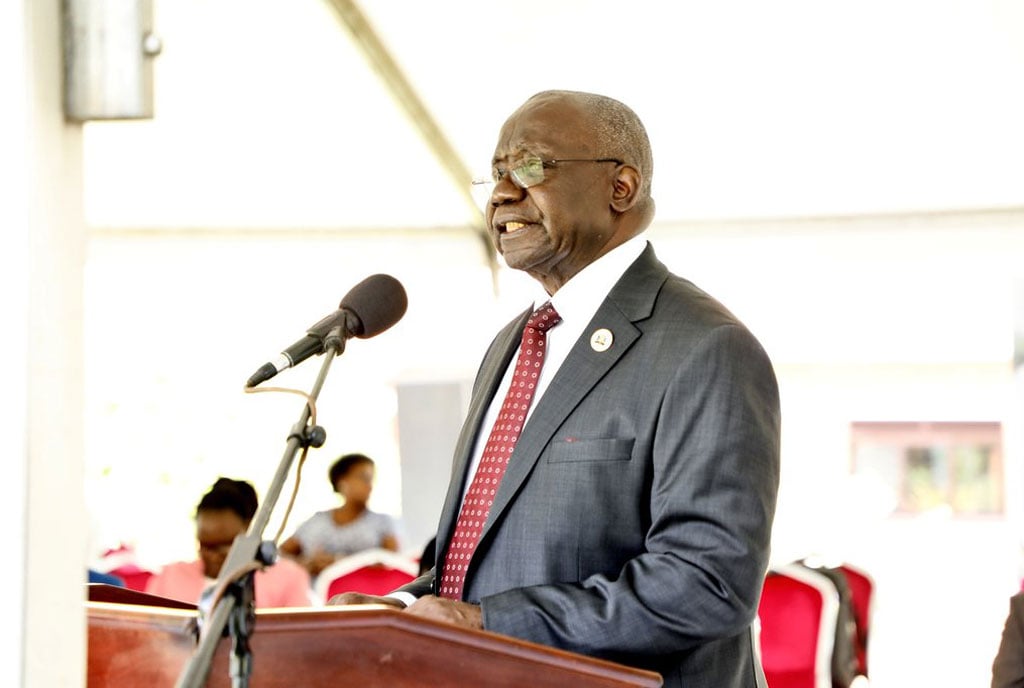
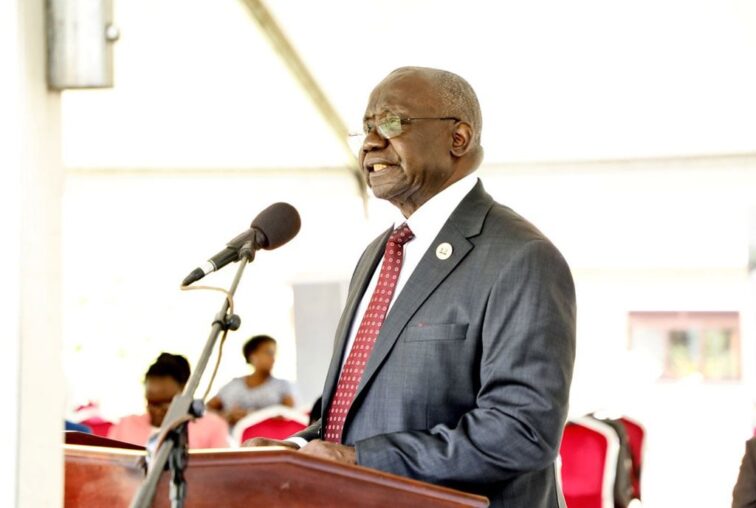
Speaking during the official release of the results, the UNEB Executive Director Mr. Daniel Odongo said this was a great achievement. “The achievement levels in the 2025 examinations have improved compared to that of 2025,” he said.
He added that, “The overall results show that 99.69% qualified for the UCE certificate and this will be indicated on their transcript and certificate as result one”. He added that only 1,191 candidates achieved result two and that even the percentage of candidates who do not qualify for UCE also dropped very significantly from 1.9% to only 0.31%.
“This will respectively be shown on their transcripts as result two or result three,” he added
According to UNEB, the format of reporting performance under the competency-based curriculum is by achievement levels indicated by letters A, B, C, D, and E.
The achievement levels for each subject are arrived at through a systematic and technical process.
This consists of statistical and psychometric methods that combine the learner’s score based on continuous assessment done at the school and the end-of-cycle examination score in the proportion of 20% the continuous assessment and 80% the end-of-cycle by unit.
According to UNEB, higher exceptional levels of achievements have been noted in Christian religious education, Geography, and English compared to 2024.
More candidates have achieved higher levels of C and above in 2025 compared to 2024.
In Sciences, Odongo noted an encouraging performance with percentages of candidates who have not achieved at least a D level dropping very significantly.
“In 2024, 12.8% of the candidates did not score even the basic level. That has now dropped very significantly from 12.8 to just 0.7,” he said
In chemistry, 6.1% in 2024 failed to achieve the minimum D level required, but that has also dropped to 0.6 this year, 2025.
Performance by gender
According to Mr Odongo, the female candidates demonstrated higher achievement levels in English language and Christian religious education.
In the other subjects, the proportions of females in the exceptional and outstanding levels are slightly lower than that of the males.
“We can conclude, that the comparison between our two genders that is males and females are very very close. In English language, females performed better. Similarly, in Christian religious education, there is also some gap particularly at the A and the B levels but the other subjects they are really very very comparable,” he said
He added that in most almost all the subjects there was a normal distribution of performance with the model or the majority the largest number of our candidates scoring at C level.
Inmates’ performance
According to UNEB, inmates at Luzira of the 40 candidates who registered 39 sat while one did not sit and all the candidates qualified for the UCE certificate.
At Mbarara Main Prisons Inmates Secondary School, the 12 candidates who registered were all present for the examination and all of them also qualified for the UCE certificate.
Special needs
In 2025, a total of 708 SNE candidates comprising 342 males and 366 females registered compared to 743 in 2024.
This consisted of candidates who are blind, those with low vision, and those that have hearing difficulties or the deaf, the dyslexics and the physically handicapped.
According to the results, 695 or 98.2 percent of the special needs candidates qualified for the UCE certificate while only nine that is 1.8 percent did not qualify.
All the candidates sat their exams from 3,975 examination centres who registered for the examination.
This was the largest increase in candidature ever recorded in the UCE examination.
Out of these, 204,292 or 47.3 percent were males while 227,817 (1:56) or 52.7 were females.
154,642 or 35.8 percent are beneficiaries of the universal secondary education program and 277,521 or 64.2 were non-UCE.
A total of 429,949 or 99.5 percent of the candidates were present in the examination compared to 357,120 in 2024.
This indicated that only 2,214 or 0.5 percent were absent.
One, the special needs candidates.
What the new grading means:
Grade “A” means a candidate is exceptional and demonstrates an extraordinary level of competency by applying innovatively and creatively the acquired knowledge and skills in real life situations.
Grade “B” means the learner is outstanding and demonstrates a high level of competency by applying the acquired knowledge and skills in real life situations.
Grade “C” means Satisfactory and demonstrates an adequate level of competency by applying the acquired knowledge and skills in real life situations.
Grade “D” means Basic and demonstrates a minimum level of competency in applying the acquired knowledge and skills in real life situations.
Grade “E” means Elementary and demonstrates below the basic level of competency in applying the acquired knowledge and skills in real life situations.
The release of the UCE results is expected to provide a detailed breakdown of performance, including overall pass rates, subject performance, gender comparisons, and trends that will help assess the progress of education reforms and learning outcomes across Uganda.
End