The United States government has stepped up its support for the regional Ebola response following the confirmation of six new Ebola cases in Uganda on June 2, bringing the cumulative number of confirmed infections to 15, including one death, according to the Ministry of Health.
In a statement, the U.S. Department of State said it continues to work closely with the U.S. Centers for Disease Control and Prevention (CDC), as well as the governments of Uganda and the Democratic Republic of Congo (DRC), to contain the outbreak and strengthen preparedness measures across the region.
“The Department’s highest priority remains protecting the health of the American people and preventing this Ebola outbreak from reaching our shores,” the statement said.
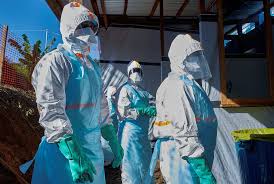
The U.S. government announced that its assistance towards combating the Ebola outbreak has exceeded 600 Billion. The funding has supported the establishment of six dedicated Ebola response facilities and strengthened dozens of health centres involved in screening, isolating, transporting and treating suspected and confirmed cases.
The Department of State also announced guidance for U.S. citizens who may have been exposed to Ebola or who wish to leave affected countries, including Uganda, the DRC and South Sudan. Americans have been encouraged to enrol in the Smart Traveler Enrollment Program (STEP) to receive timely health and travel updates.
As part of efforts to curb cross-border transmission, the International Organization for Migration (IOM), with U.S. funding, has strengthened health screening and surveillance at border entry points and checkpoints in Uganda, the DRC, South Sudan, Rwanda and Burundi.
In the DRC, U.S.-funded partner FHI 360 has supported community awareness campaigns involving religious leaders, youth groups and local authorities to improve public understanding of Ebola prevention measures and counter misinformation about the disease.
The organisation has also expanded laboratory capacity by training personnel, facilitating sample transportation and supporting testing services in additional health zones to speed up diagnosis and response.
Beyond health interventions, the United States has committed $350 million (1trillion ugx) through United Nations humanitarian pooled funds to support emergency operations in Uganda, South Sudan and the DRC. The contribution forms part of a wider $1.8 billion (600,000ugx) humanitarian assistance package announced in May.
The World Food Programme (WFP), supported by U.S. funding and other donors, is also providing food assistance to Ebola patients, suspected cases and frontline health workers in affected areas.
The six cases confirmed on June 2 were identified among individuals who had been listed as contacts of previously confirmed Ebola patients, highlighting the importance of contact tracing and surveillance in containing the outbreak.
Ugandan health authorities have urged the public to remain vigilant, report suspected symptoms promptly and cooperate with health workers as response efforts continue.