By Reuters
With Donald Trump’s pledge to quickly end the war between Ukraine and Russia, market players are starting to look at what impact that could have on the rouble, which became an outcast following sanctions.
HOW HAS THE ROUBLE FARED IN RECENT MONTHS?
The rouble RUB= started the year slumping to its weakest mark since March 2022 but has strengthened by about 10% since, becoming the best performing currency across emerging markets in 2025.
Despite U.S. energy sanctions imposed on Jan. 10, the currency is on track for its best month since emergency interest rate hikes, capital controls and other measures shored it up in the wake of the February 2022 invasion of Ukraine.
In 2024, it started strengthening in mid-April as military advances marked a change of tide in Russia’s favour and despite a decline in oil prices, Russia’s main export commodity.
Ukraine’s incursion into Russia’s Kursk region reversed that. Rouble losses accelerated in November when Washington slapped sanctions on Gazprombank which handles energy export payments and served as the main conduit for foreign currency receipts.
WHAT IMPACT COULD ANY TRUMP-PUTIN TALKS HAVE?
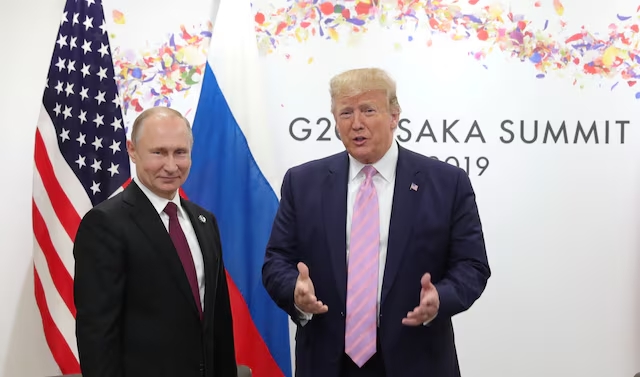
Some analysts expect some Western sanctions on Moscow could be partially lifted should Trump hold direct talks with Russian President Vladimir Putin – although even Trump’s advisers have acknowledged any resolution to the war is unlikely to come immediately.
Some expect a rally in the rouble driven by payments for Russian exports and resumption of some foreign investment amid a potential gradual re-integration into the global system.
Others point to huge deferred demand for imports from industries such as aviation or power generation, where existing needs for spare parts amount to tens of billions of dollars which could send the rouble into a free fall.
However, sanctions will likely mostly stay until a sustainable resolution to the war is found, which could take years.
WHAT IS THE VALUE OF THE ROUBLE?
The rouble has been driven by battlefield developments and sanctions rather than macroeconomic fundamentals, making it challenging to calculate its fair value.
Estimates are getting scarcer. Many international analysts have stopped publishing rouble research and calculations.
The Moscow Stock Exchange (MOEX), Russia’s main FX trading platform, and Russian banks have developed data products for the domestic market. Some non-Russian banks continue to supply rouble data to international data services.
The central bank said in a Jan. 17 report the real effective exchange rate, a measure used to approximate “fair value” of a currency, was 9% below its 10-year median.
Russian business leaders, including Sberbank CEO German Gref and Bank VTB CEO Andrei Kostin have said that a level just above 100 to the dollar is comfortable for the economy.
DOES THE ROUBLE BEHAVE LIKE OTHER EMERGING CURRENCIES?
Rouble moves have been much more unpredictable since spring 2022. Market panic at the start of the war saw the currency plunge to 150 to the dollar. Russia sought to stop forex outflows, banning asset sales by foreign companies and imposing forex sales requirements on exporters.
As imports shrank due to Western sanctions, creating an excess of forex, the rouble sharply strengthened to around 50 to the dollar in June 2022. It last traded at around 101.5 to the dollar.
HOW DOES RUSSIA’S FOREX MARKET WORK UNDER SANCTIONS?
Dollar and euro trades moved to over-the-counter markets between banks after the U.S. sanctioned MOEX in June 2024.
China’s yuan became the most traded currency on MOEX and currency of choice for central bank interventions.
The central bank sets official exchange rates based on interbank trade data supplied by lenders and – together with rouble/dollar futures trading on MOEX – provide the best proxy for the over-the-counter market rates, according to FX traders.
Authorities say they will stick to a floating exchange rate policy.
WHAT CAN BANKS AND COMPANIES STILL DO IN RUSSIA’S FX MARKET?
Just under half of Russia’s 316 banks are not under sanctions and can buy and sell dollars and euros. Subsidiaries of some major Western banks such as Italy’s UniCredit CRDI.MI, Hungary’s OTP OTP.BU and Austria’s Raiffeisen Bank InternationalRBIV.VI are also operating there.
Domestic demand for dollars and euros comes from importing companies, since 15% of imports still come from Europe but the share of dollars and euros in foreign trade is seen decreasing.