
By Damali Mukhaye
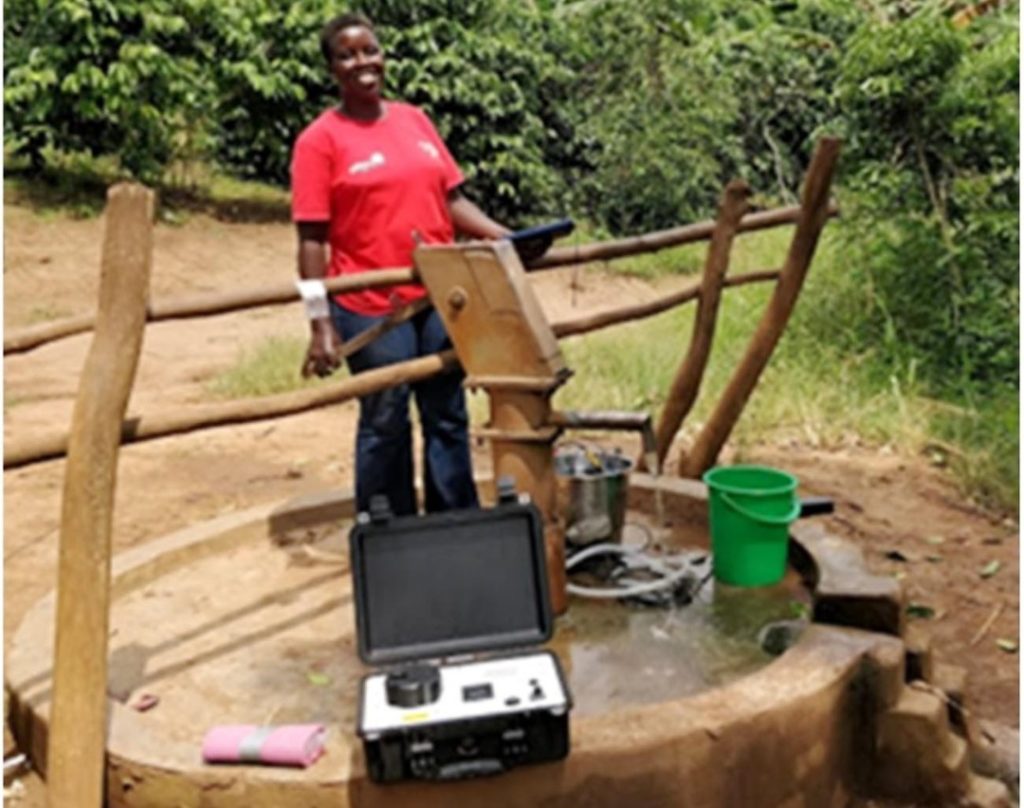
Makerere University scientists have developed a new device to monitor the risk of contamination in drinking water consumed by people in Uganda.
The new device named “In-situ fluorescence spectroscopy” gives instant results which scientists say can help reduce exposure to waterborne diseases.
Dr Robinah Kulabako from Makerere University’s Department of Civil and Environmental Engineering says drinking water contaminated with human and animal faecal matter is consumed by at least two billion people worldwide, which she says is responsible for outbreaks of waterborne diseases.
She says that the current method to test water takes about 1 to 2 days before results are returned, hence people are already exposed to faecal contamination.
Dr Kulabako says with the new device, people can easily tell if the water is contaminated with faeces or not immediately without going to the laboratory using the new device.
Co-author Jacintha Nayebare, PhD student at Makerere University says analysis of these indicators requires the use of sterile equipment and culturing techniques, which practically limit the frequency of water sampling so that contamination events can be missed.
“In-situ fluorescence spectroscopy provides an instantaneous assessment of faecal contamination allowing rapid feedback to consumers that could reduce exposure of consumers to faecally contaminated drinking water.”