
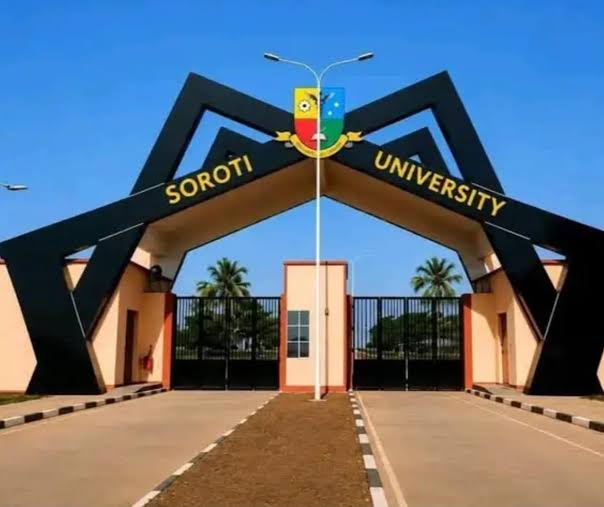
By Suzan Nanjala
Soroti University has appealed to the government for support to document, test and develop medicinal plants into products that can be manufactured and sold on the market.
Prof Patrick Ogwang, the Head of Pharmacology at Soroti University, said the department was exploring ways of developing natural medicines for pain management as part of efforts to identify locally available alternatives to commonly used painkillers such as paracetamol and diclofenac.
Prof Ogwang said the department needed support to establish a system for collecting, documenting and archiving information about medicinal plants before testing their effectiveness and identifying their potential uses.
“Now I request you to support the university so that we can capture information, archive it and test which plant will work for what,” Ogwang said.
He said the research could enable the university to identify useful medicinal plants, develop products and eventually take them to factories for commercial production.
Prof Ogwang made the appeal during a visit by the Minister of State for Science, Technology and Innovation, Eng. Jonard Asimwe Akiiki, to assess research and innovation projects at the university.
The visit to Soroti University is part of a wider government assessment of research and innovation across four public universities, with Eng Asimwe expected to visit Lira, Muni and Gulu universities to assess their innovations and identify those that can be supported for further development and commercialization.
Eng Asimwe pledged government support towards strengthening research and innovation at the institution, saying his team would assess the showcased projects to identify those that could benefit from additional technical knowledge and funding.
“The innovations here are still under mentorship, and the team will assess them to see how we can add knowledge and fund those that are eligible,” Eng Asimwe said.
He challenged universities to move beyond academic research and produce tangible innovations that address the country’s development needs, create employment and improve productivity.
He cautioned researchers against misusing funds allocated for research without producing meaningful results, saying this would undermine the country’s development efforts.
“If you are a researcher, your mandate is to produce a product, but eating the money and lying to people will be killing generations,” he said.
Eng Asimwe said investment in science, technology and innovation was important in improving production, strengthening working methods and making services and processes more efficient. He urged universities to ensure their research responds to practical challenges and contributes to the country’s economic transformation.
Soroti University Vice Chancellor, Prof John Robert Ikoja, said the institution had received Shs2 billion in government research funding this financial year, marking the first time it had received the allocation directly.
He said previously the funds were channeled through sister universities, making it difficult for Soroti University to access the money.
“It took us a lot of explaining in order to access the funds,” Ikoja said.
He said although research at the university was relatively new, this should not be an excuse for poor performance, adding that universities should compete while collaborating to conduct meaningful research.
However, Prof Ikoja cited inadequate funding, limited research infrastructure and lack of transport to collect samples from different parts of the country as some of the challenges affecting researchers.
He appealed for government support to establish specialised laboratories, particularly a histopathology laboratory under the School of Health Sciences, saying it could serve patients from distant areas, including Karamoja and Jinja.
Prof Ikoja said the university could not register the laboratory without the necessary equipment and adequate space.
He also appealed for two dedicated laboratory blocks, one for health sciences and another for engineering, saying researchers often compete with undergraduate students for access to existing facilities.
Prof Ikoja further asked the government to consider supporting nuclear science training at the university, citing the institution’s available land.
Meanwhile, a student at the university, Eric Nakasala, said he had attempted several projects but had not succeeded, adding that increased research support would help students develop their ideas and build their careers.
The university’s appeal highlights the need for stronger government investment in research facilities, funding and technical support to enable universities to turn locally developed ideas into practical products that address community needs and contribute to economic growth.