By Catherine Ageno
KASESE: In a move meant to preserve their culture and identity, the Bagabo- an Indigenous Minority Grouping (IMGs) in Uganda have embarked on a mission to document their oral history.
This follows a recent proposal by President Museveni to have 10,000 acres of land allocated to them in Ankole and Bunyoro sub regions, which they say may cause what they describe as cultural uprooting.
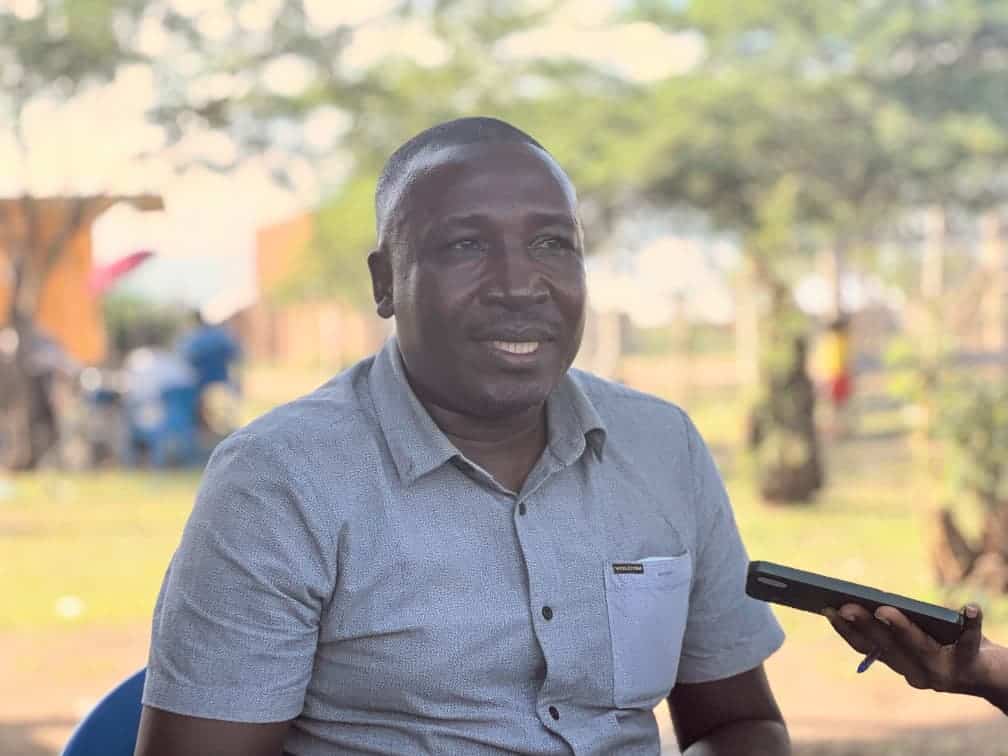
According to Mr. Emmanuel Kyalimpa, a Mugabo elder and chairperson of the Rwenzori Indigenous Minority Groups, the said land is to be identified in the far off areas from their ancestral area, which threatens their cultural identity.
Addressing journalists at Kasenyi Landing Site in Kasese District recently, he explained that the Bagabo lost a lot of land to the National Parks and deserve to be compensated by not to be removed from their ancestral land. He added that the Bagabo are best placed to conserve natural resources using indigenous knowledge so they need to be supported from where they are.
“The Bagabo have been around for 500 years but they are left landless because they lost huge chunks to National Parks including; Rwenzori, Tooro, Semiliki and Queen Elizabeth”, said Mr. Kyalimpa during an interaction with journalists during a recent media learning tour in Kigabo village in Kasese district.
The Bagabo are comprised of nine ethnic groups; the Basongora, Batuku, Bamba, Batwa, Bakigwa, Bavunuma, Babwisi, Banyabindi and Kuswa. Despite their existence however, these IMGs are not recognised in Uganda’s Constitution. To address this challenge, the Basongora came together to form a unified voice for advocacy- the IMGs.
“In terms of education, the Bagabo generally lag behind. Our children have very limited chances of attaining higher education because we often miss out on government scholarships and this automatically reduces their chances of getting recruited into civil service”, said Mr. Kyalimpa.
Through this platform, the Bagabo have managed to document their oral history and culture and with support from the Cross Cultural Foundation of Uganda (CCFU), they are constructing a museum that will house all this information and artefacts.
This Bagabo Cultural Enterprise Project is located in Kigabo village in Kasenyi Parish, Lake Katwe Subcounty, Busongora County in Kasese district. “This local museum that’s near completion will mainly be used for cultural preservation. It will have information on such things as cultural dances, language, traditional foods and will even house a restaurant that serves only local foods”, said Mr. Fredrick Nsibambi, the Deputy Executive Director CCFU.
Some of the items to be showcased in the museum are the Basongora people’s dress code, information on traditional events, proverbs, literature, customs and initiation. “We have very unique delicacies such as smoked fish served with bread made from cassava mixed with millet flour, unpeeled plantain, or muchomo. As you can see, fish is an important to us, which explains why fishing in a major economic activity in my community. You therefore cannot separate the Bagabo from a water body such as this”, Mr Kyalimpa explained.
According to Mr. Kyalimpa, as the CCFU celebrates 20 years of its existence this year, some of the notable achievements his community has registered through support from the organisation include; appointment of some of their people to the District Service Commission to ensure inclusivity. The Bagabo are now recipients of 10 government scholarships per year, and have been able to document their oral history.
The CCFU has also supported a women-led Basongora Culture preservation project in Muhokya, led by Ms Beatrice Mukancwange. The Ekisabu Dairy Women’s Cultural Trust is a seven-member project that promotes Basongora culture through traditional music, foods and artefacts showcased at events like weddings and other social gatherings where the women are hired to perform.
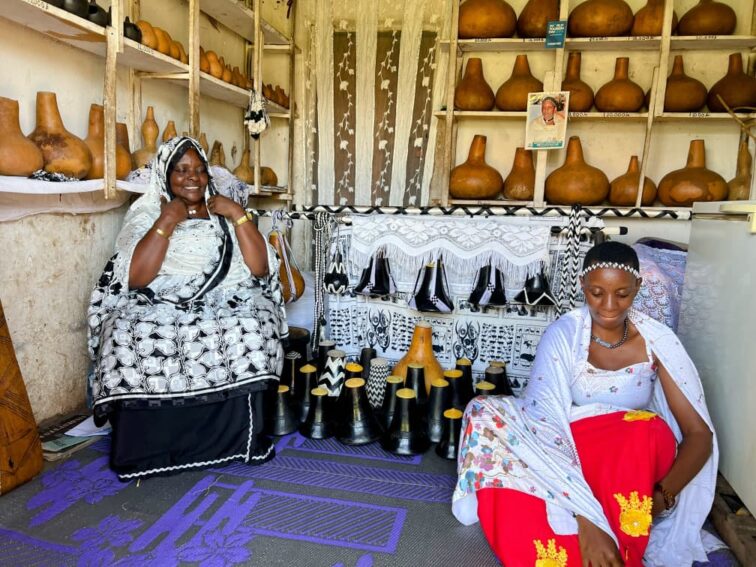
Ms. Beatrice Mukancwange pictured with a colleague after an interview with journalists in Muhokya, Kasese District.
The women’s group is also looking to promote the Basongora culture through education. “We have been collaborating with a number of local schools to teach the young generation about the Basongora culture and now we are working on a Memorandum of Understanding with the Mountains of the Moon University”, Ms Mukancwange told journalists.
The government, through the Uganda Human Rights Commission, has committed to supporting IMGs to achieve their rights to self-determination, recognition and dignity in their territories.
This commitment was made by the Commission Chairperson, Ms. Mariam Wangandya made the commitment earlier during the celebrations organised by the Cross Cultural Foundation of Uganda (CCFU) to mark the 2025 International Day of the World’s Indigenous Peoples.
The event was organized under the theme; “Indigenous Peoples’ Right to self-determination: A pathway for food security and sovereignty”.
During the event, Ms. Wangadya highlighted that while Uganda’s Constitution, under Article 36, guarantees the right of minorities to participate in decisions that affect them, this recognition mostly remains on paper.