Uganda is strengthening regional cooperation on locally led adaptation (LLA), bringing together climate practitioners and government representatives from Uganda, Kenya and Tanzania to share experiences on financing and implementing climate resilience initiatives.
The regional workshop, held from October 7–8, 2026, was organised by the Government of Uganda through the Ministry of Local Government, with support from the Danish Embassy in Uganda and the United Nations Capital Development Fund (UNCDF).
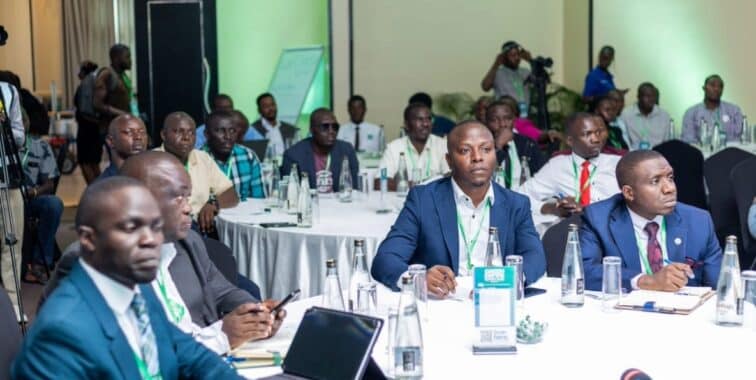
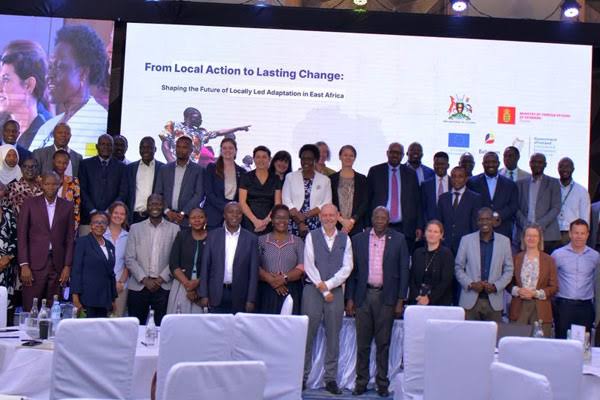
Held under the theme “From Local Action to Lasting Change: Shaping the Future of Locally Led Adaptation in East Africa,” the workshop brought together representatives from government institutions, local governments, development partners, civil society organisations, academia and the private sector.
The meeting focused on sharing lessons from ongoing locally led adaptation programmes in the three countries, strengthening regional collaboration and exploring ways to integrate climate resilience into national and local planning and budgeting.
Uganda’s Local Climate Adaptive Living Facility (LoCAL+) is among the mechanisms designed to channel climate finance to local governments and support adaptation initiatives informed by local climate risks and community needs.
LoCAL+ is being implemented in 24 districts, while the Least Developed Countries Initiative for Effective Adaptation and Resilience (LIFE-AR) covers 12 districts. However, at the current funding stage, 26 districts have received funding: 24 under LoCAL+ and two under LIFE-AR.
Speaking at the workshop, the State Minister for Water and Environment, Beatrice Anywar Atim, said the regional exchange should translate into practical solutions that countries could adapt to the needs of their individual communities.
She welcomed the opportunity for Uganda to learn from the experiences of Kenya and Tanzania while sharing its own approaches to climate adaptation.
“The workshop provides an opportunity for us to learn from what our colleagues in Kenya and Tanzania are doing, while also sharing Uganda’s experiences, so that together we can identify practical solutions to our climate adaptation challenges,” Anywar said.
“What can we borrow from our colleagues? What are they doing differently from us, and what are we doing differently from them? I think that is the spirit of East Africa,” she said.
Anywar also stressed that regional cooperation should extend beyond government institutions to include the communities directly affected by climate change.
She said local people should be involved in identifying their priorities and determining how adaptation interventions are designed and implemented, rather than being treated merely as beneficiaries of decisions made elsewhere.
“It is the same people who can tell us what their priorities are and how they want to implement the solutions. They are the ones affected, and they are the biggest stakeholders,” she said.
The Permanent Secretary in the Ministry of Local Government, Ben Kumumanya, said climate change is a shared regional challenge that required countries to work together rather than develop responses independently.
“What affects Uganda also affects Kenya and Tanzania. Climate change does not stop at national borders, so we need to work together, share experiences and develop strategies that respond to the challenges we face across the region,” Kumumanya said.
He explained that the workshop was intended to provide a platform for the three countries to examine their respective experiences, learn from approaches that had worked elsewhere and identify solutions that could be adapted across national boundaries.
Kumumanya noted that such exchanges were important because countries and communities experience climate change differently. Understanding these variations, he said, would help governments develop adaptation measures that respond to local conditions instead of relying on uniform approaches.
The Ambassador of Denmark to Uganda, H.E. Signe Winding Albjerg, said the interconnected nature of East Africa made cooperation on climate resilience particularly important.
She noted that Uganda, Kenya and Tanzania share water bodies, borders, infrastructure, trade and investment, creating links through which climate-related challenges and their effects can extend beyond national boundaries.
She explained that cooperation between the three countries offered an opportunity to draw on the experiences of different adaptation programmes and strengthen the ability of governments and local institutions to respond to climate risks.
“We need an honest and constructive dialogue in which the lessons, including the difficult lessons from programmes and districts, can help our colleagues and neighbours avoid making the same mistakes,” she said.
Participants exchanged experiences from ongoing adaptation initiatives in the three countries, including Kenya’s Financing Locally Led Climate Action (FLLoCA) programme, Uganda’s LoCAL+ and locally led adaptation framework, and Tanzania’s approaches to climate adaptation.
Country experiences included examples from local governments and districts, allowing participants to examine how adaptation initiatives are designed and implemented in different contexts.
The discussions also covered private-sector participation in climate adaptation, social accountability, inclusion and ways to document evidence of climate resilience at national and local levels.